Topify.ai
Product Design
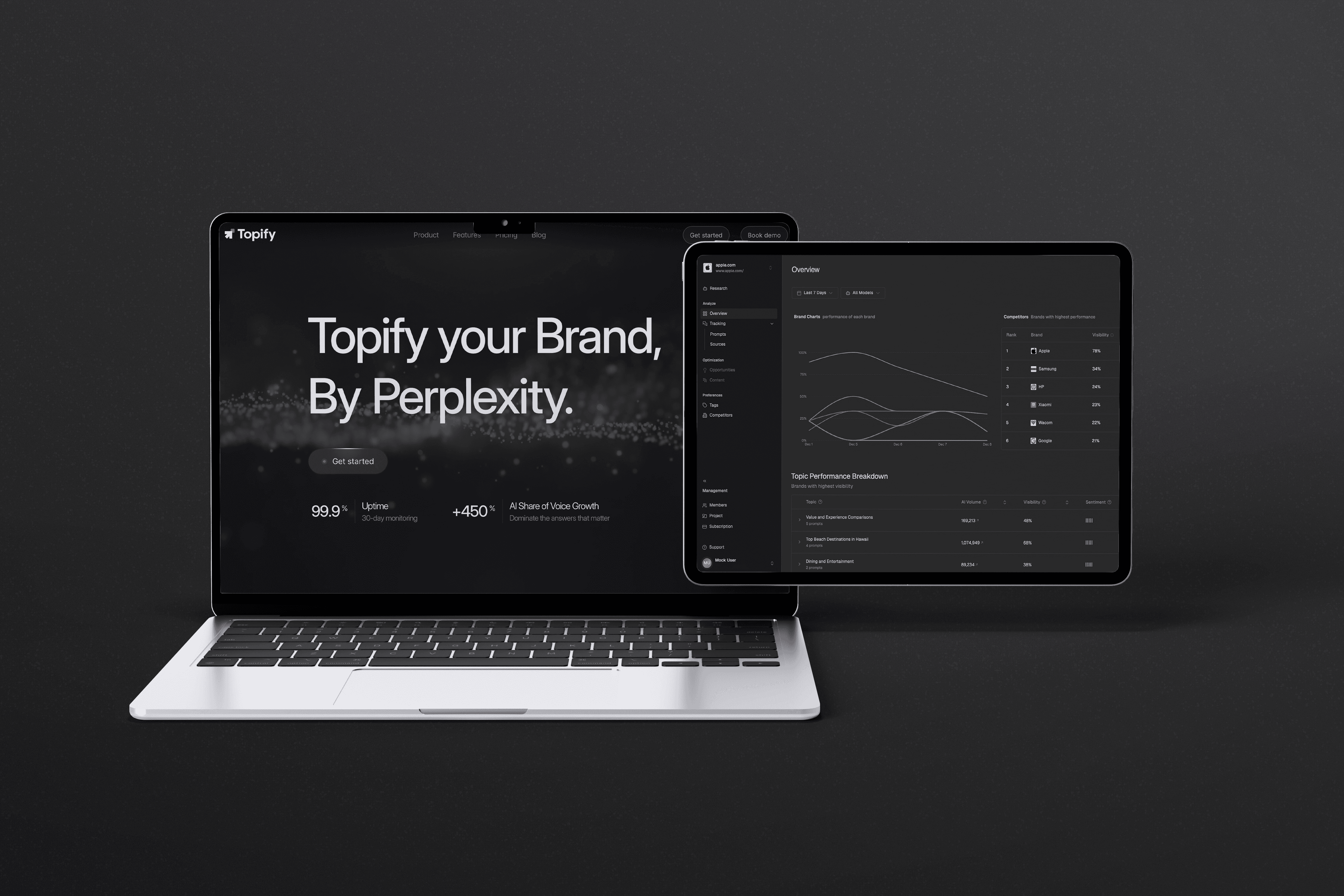
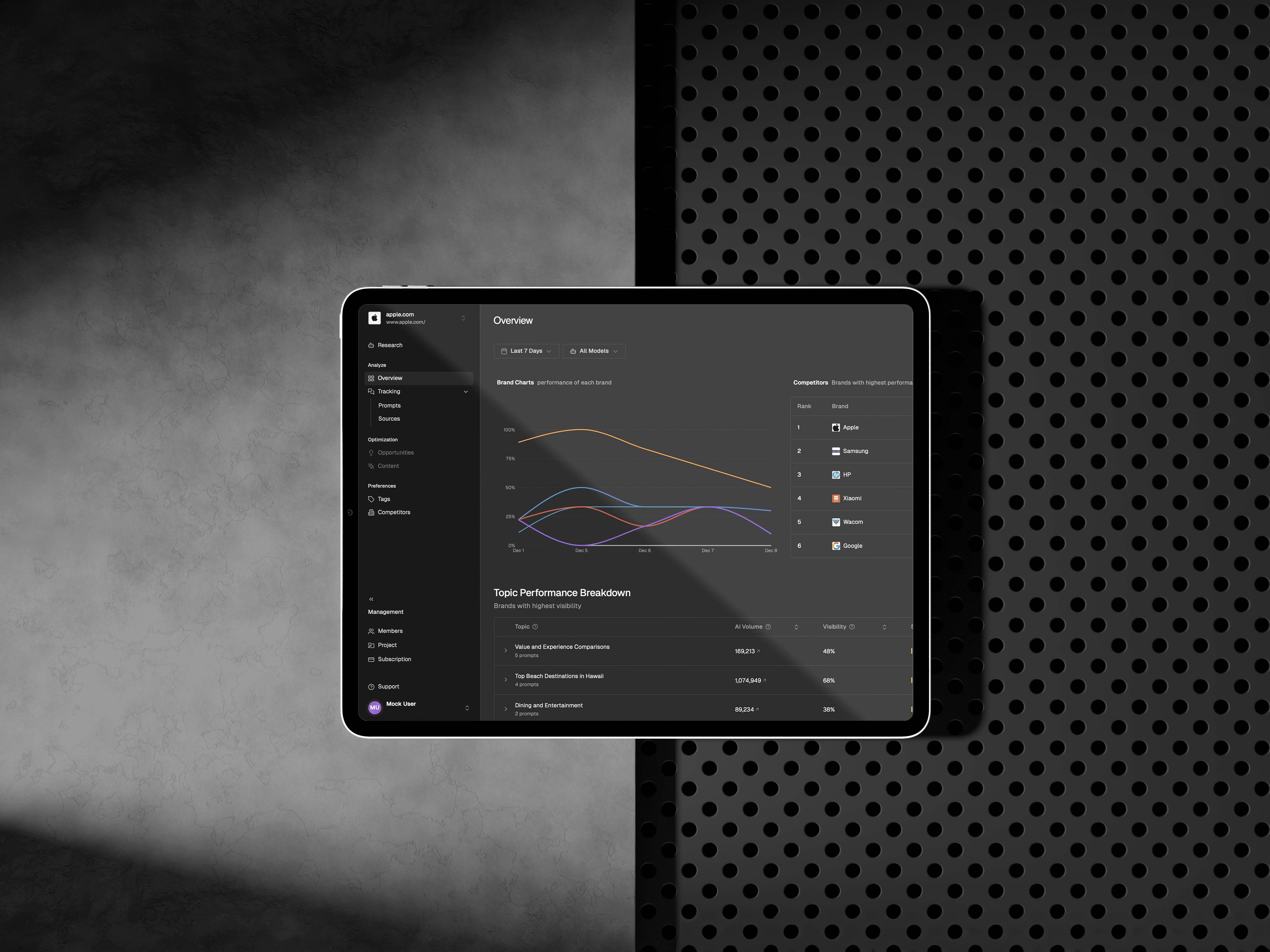
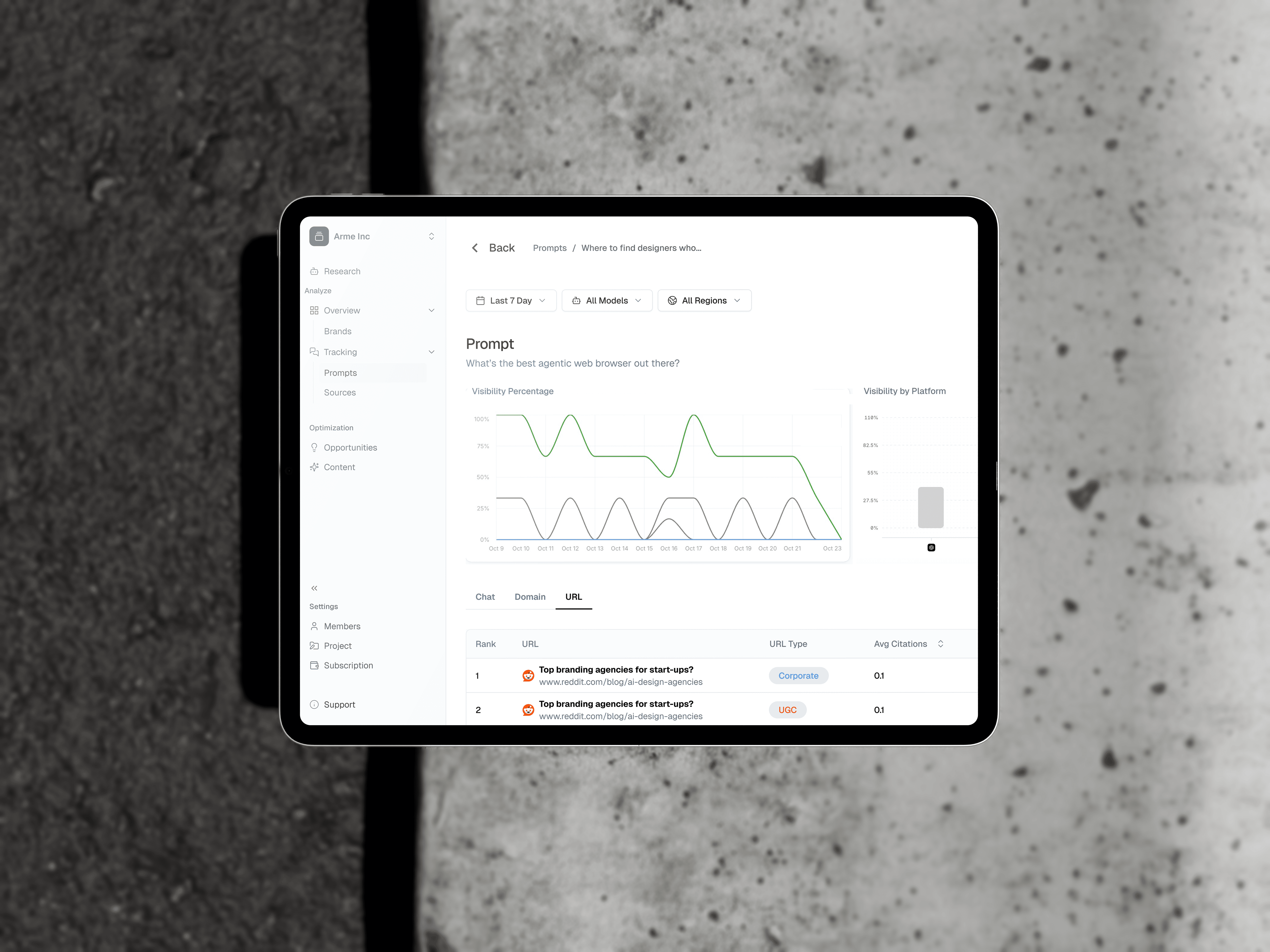
Most AI analytics tools focus on raw data, but fail to translate insights into real decision-making value. As generative AI begins to shape how information is surfaced and trusted, brands lack visibility into how they appear within AI-driven answers. Topify is designed to help brands understand how they are discovered, interpreted, and recommended across generative AI systems. By visualizing AI share of voice, topic visibility, and sentiment trends in real time, the platform supports decision-making in an emerging Generative Engine Optimization (GEO) landscape—where visibility is no longer about ranking links, but influence within AI-generated responses.
Client:
Topify.ai
Role:
Product Designer
Year:
2025


Challenge
As Topify evolved into a B2B SaaS platform, both the marketing website and the product experience struggled to clearly communicate its value. As generative AI increasingly shapes how information is surfaced and trusted, brands face new challenges understanding their visibility within AI-driven answers. The existing website lacked a cohesive narrative, while the product interface made it difficult for users to quickly understand AI visibility insights and make informed decisions. This gap affected onboarding efficiency, trust, and overall product clarity for business users.
Objective
After joining Topify, my objective was to redesign the official website to clearly communicate the product’s value in the context of generative AI and B2B SaaS. At the same time, I collaborated with product and engineering teams to support iterative improvements across the ToB platform—focusing on information hierarchy, clarity of AI insights, and usability—so business users could quickly understand data, trust the product, and make informed decisions.
Results
The redesigned website established a more coherent product narrative and professional visual system, improving clarity around Topify’s positioning and core capabilities. Ongoing product iterations enhanced readability of complex AI-driven data and reduced cognitive load for enterprise users. These efforts contributed to smoother onboarding, better cross-team alignment, and a more scalable design foundation for future SaaS feature development.